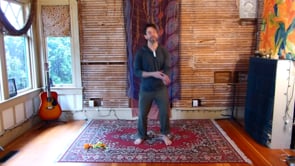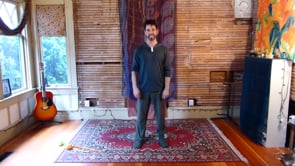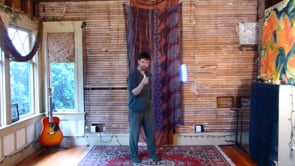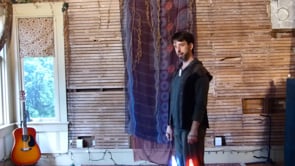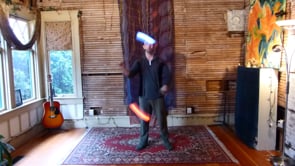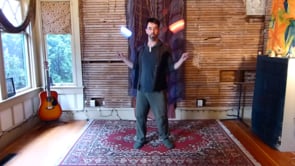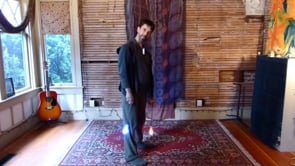
Behind the back weave - planes and the space around you
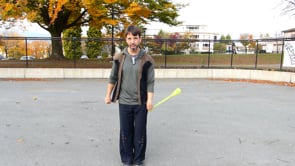
Poi behind-the-back weave focused on plane control and awareness of the space around the body. The lesson highlights keeping the weave symmetrical, managing plane width and angle, and using visual reference lines to check alignment without looking down.
Lesson • Poi • Behind The Back • Plane • Weave
Related lessons
Keep learning
Explore lessons that share concepts with this one

Lesson • Poi • Behind The Back • Weave
How to get into forward behind the back weave
Lesson • Poi • Behind The Back • Weave
Too fat for behind the back weave

Lesson • Poi • Behind The Back • Weave
Behind the back weave leadups
Poi Dancing: Beyond the Basics (Part 2)
Intermediate • Poi • Course
0
0%
0
0%
0
0%
66
Flowarts Teacher
Nick Woolsey
About this course
Develop advanced coordination and explore more complex variations. Strengthen your understanding of flow mechanics and start linking ideas into longer sequences.
66
Lessons
5
Free Lessons
6.5
hours